Level 4 · Lesson 12 · The finale
Exploitative vs. GTO play
There are two great philosophies for winning at poker. One makes you impossible to beat; the other punishes opponents who make mistakes. After this lesson, you'll understand both — and when to use each — so you can hold your own against anyone at the table.
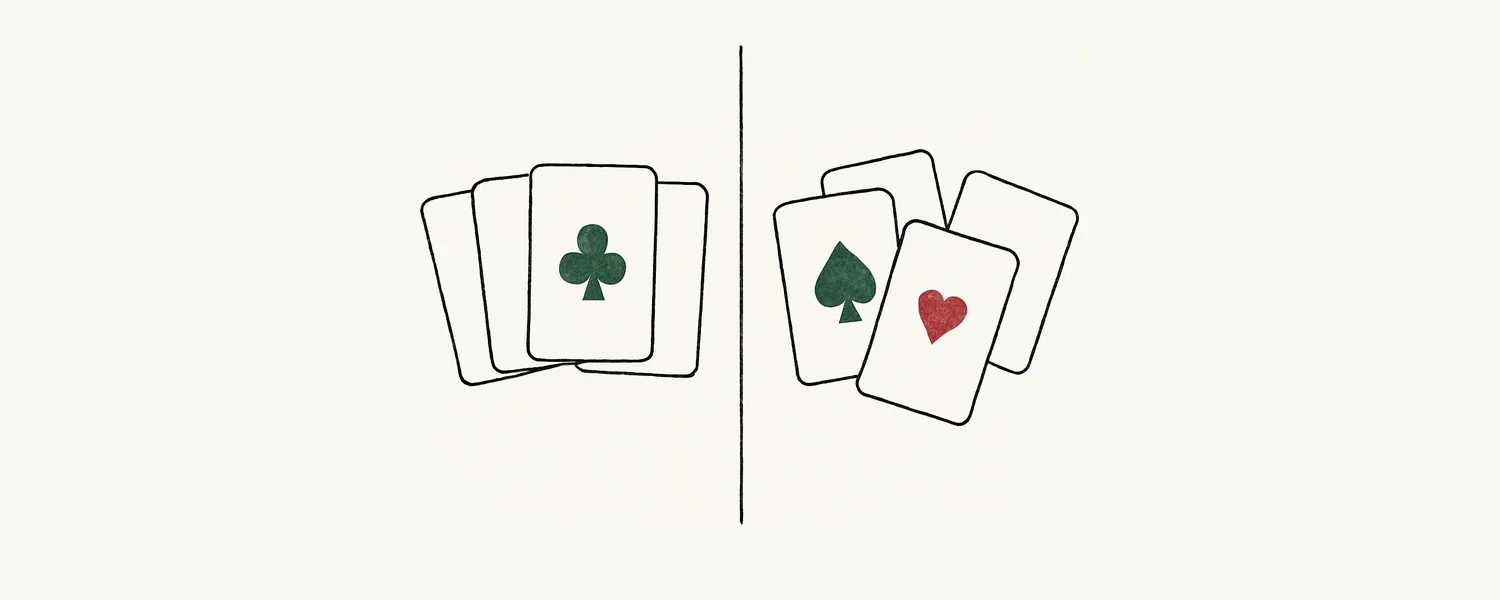
GTO: the unbeatable baseline
GTO stands for game theory optimal. A GTO strategy is perfectly balanced — it mixes value bets and bluffs in exactly the right proportions so that no matter what your opponent does, they can't exploit you. Played perfectly on both sides, neither player can improve their result. Think of it as a defensive fortress: against a GTO player you simply can't find a leak to attack.
GTO is built directly on expected value — it's the strategy that can't be made −EV by any opponent's adjustment. Solvers (computer programs) approximate it, and studying their output is how modern pros train.
Exploitative play: punishing mistakes
Exploitative play does the opposite: it deliberately deviates from the balanced baseline to take maximum advantage of a specific opponent's mistakes.
- Opponent folds too often? Bluff more.
- Opponent calls everything? Stop bluffing and bet your value hands bigger.
- Opponent never raises without the nuts? Fold more when they do.
Exploitative play wins more than GTO against flawed opponents — which is most opponents. The catch: by deviating, you open yourself to being counter-exploited if your read is wrong.
You've finished the course
From "which hand wins the pot?" to balancing a betting range — you now have the complete conceptual map of No-Limit Texas Hold'em. You can explain the rules, the flow, and the strategy that separates winners from everyone else.
Where to go next: revisit any lesson from the full list, keep the hand-rankings and starting-hand sheets beside you, and — most important — play. Concepts become skill only at the table. Deal yourself hands, join a friendly game, and watch the ideas from these twelve lessons come alive.
Check yourself — no peeking
Answer each from memory. Retrieving the answer is what builds lasting recall.