Level 2 · Lesson 6
Why position is power
If there's one idea that separates winning players from losing ones, it's position. After this lesson, you'll use your seat as a weapon the way they do — a free, permanent edge most opponents never notice they're handing you.
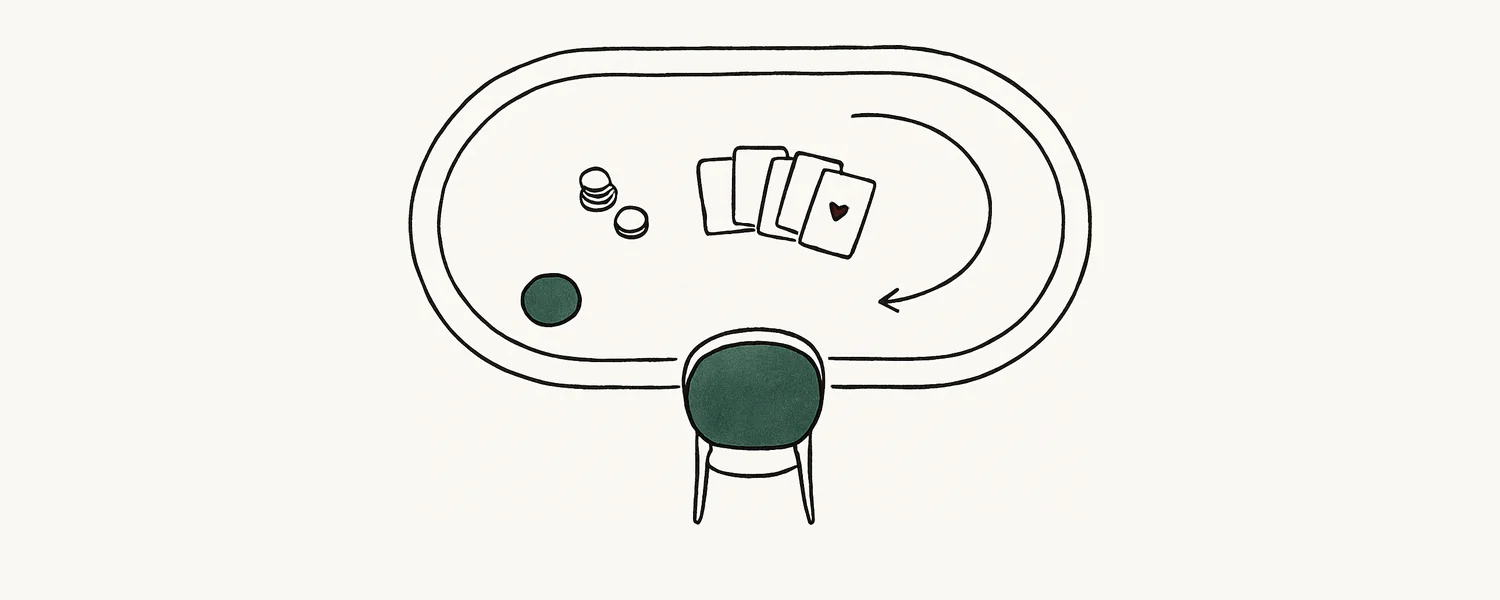
In position vs out of position
You are in position when you act after your opponent on each post-flop betting round, and out of position when you must act first. Because the button acts last (Lesson 2), it's the most in-position seat at the table; the blinds are the most out-of-position.
Why acting last is worth money
Information. When you act last you've already watched everyone else check, bet, or raise — and that tells you about the strength of their hands. With that knowledge you can:
- Bet for value when they've shown weakness by checking.
- Take a free card by checking behind when you have a draw, instead of being bet off the hand.
- Control the pot size — keeping it small with a marginal hand, big with a strong one.
- Bluff more credibly, because you've seen the whole board play out.
Out of position you have none of this. You're guessing first and reacting later — which is why the same hand earns far more in position than out of it.
Position in heads-up play
One-on-one, position swings between just two players, so it matters on every single hand. The button posts the small blind and acts first preflop but last on every later street — a huge edge. It's why aggressive players relish the button in heads-up games.
Check yourself — no peeking
Answer each from memory. Retrieving the answer is what builds lasting recall.